Wild horses
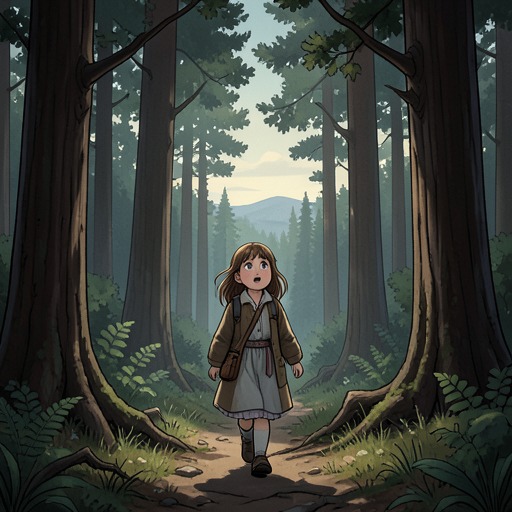
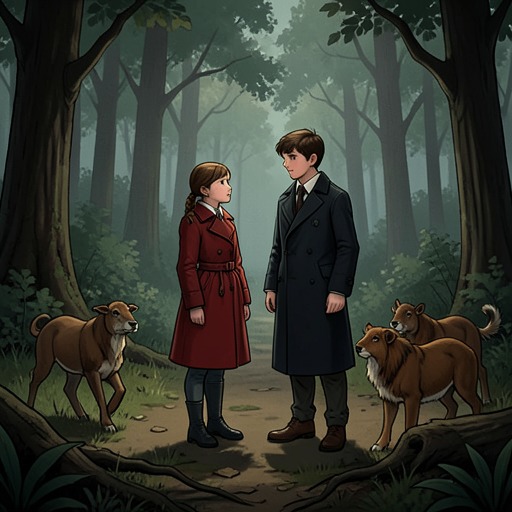
Ronja, the Robber's DaughterWild horses are not simply transportation or possessions in Ronia’s forest. They belong to the shared woodland, act according to their own fear and preference, and resist being made domestic; their encounters with Ronia and Birk make that independence a practical fact rather than an abstract principle. The children learn to ride some of them, but even their closest animal relationships do not erase the difference between companionship and ownership.
Forest Inhabitants, Not Property
When Ronia finds Birk watching fox cubs near their den, she tells him to leave her cubs and her woods alone. Birk answers that the cubs belong to themselves and that the forest belongs not to any one person but to its many inhabitants: foxes, wolves, bears, elk, wild horses, birds, insects, and other creatures. The wild horses are part of this catalogue of shared life, which challenges Ronia’s possessive language without denying her knowledge or affection for the forest.
That idea becomes concrete in the spring glade. Ronia and Birk sit quietly among birds, hares, squirrels, and a snake, leaving one another undisturbed; nearby, the newborn fox cubs play. Ronia recognizes the same principle when she decides that she will not take a horse away from the woods where it belongs. She still wants to ride, but the wish must be reconciled with the animal’s place in the forest, not treated as permission to claim it.
Resistance and Chosen Companionship
The horses do not respond to human kindness as an invitation to be handled. After Ronia and Birk settle in Bear’s Cave, they approach Villain and Savage gently, but the horses run away to graze in peace. Their refusal is neither a puzzle the children can solve by insisting nor a failure of affection: for the moment, the horses prefer distance.
Ronia’s later experience with Villain shows the cost of riding without his willingness. She has difficulty managing him, and when she gets onto his back again he bolts through the trees, trying to throw her. She grips his mane and knees, determined to stay on, while branches whip past and she cries for help. Birk pursues them on Savage and overtakes the frightened horse. When he pulls Savage up sharply, Villain has to stop; Ronia is flung forward but manages to regain her seat. Villain, spent and trembling, is calmed when she pats and praises him. The episode marks a hard-won change in their encounter, but it begins in fear and resistance, not in effortless mastery.
Over time, the relationship with the two horses becomes reciprocal in a limited, recognizable way. Villain and Savage start running eagerly to Ronia and Birk, and the four race through the forest together. Riding brings the children great pleasure, yet the horses’ approach and their enjoyment of running matter: the arrangement is not only a human decision imposed on unwilling animals. Their agency remains visible in how they respond, and the children’s pleasure depends on the horses choosing to come.
The Mare Lia and the Limits of Use
Lia’s story makes the boundary between care and use especially clear. During the children’s time in the forest, she provides milk, but her supply is temporary. Ronia and Birk know that Lia will soon have another foal and that the milk belongs to it. When the flour Ronia brought from home is gone and the last bread has been baked on hot hearth stones, they face the approaching loss of both bread and milk. They have other ways to find food—fish, birds, edible leaves and herbs, and ripening berries—but Ronia admits that the first day without bread or milk will not be pleasant.
When Lia finally yields only a few drops and shows that she has had enough, Ronia accepts the signal. She takes the mare’s head between her hands, thanks her for the milk, and tells her that the next summer’s milk will be for her foal, not for the children. Ronia asks Birk to thank Lia too, and he does. Their stay with the mare ends not with an attempt to prolong their access to her, but with an acknowledgment that her needs and future are her own.
Lia follows them a short way as they leave, then turns back to her herd. Ronia and Birk sometimes see her later and call her name; she answers with a whinny but does not leave the other horses to join them. The bond is real without making Lia tame. Her return to the herd gives the distinction its clearest form: familiarity does not cancel her life as a wild horse.
Fear, Seasons, and Departure
The horses’ vulnerability becomes evident when a wild harpy chases Ronia and Birk. Villain and Savage panic and can no longer be guided, so the children throw themselves off and let them run. The danger is directed at the humans, not the animals: without riders, the horses have nothing to fear from the harpy. The scene breaks the children’s usual partnership with them and shows that riding can place animals within a danger created by human presence.
Afterward, the horses keep away for a time, frightened both by the harpy and by the people who had been on their backs during the chase. Later they seem to have forgotten and return to run with Ronia and Birk. Their behavior carries the memory and recovery of the encounter without turning them into permanently obedient companions.
The forest’s seasonal changes eventually require the children to leave Bear’s Cave. As Matt leads them through the woods, Villain and Savage stay behind rather than fleeing with the other wild horses; Ronia strokes Villain and promises that they may ride again the next day if there is not too much snow. Birk pats Savage and urges him to stay alive. The children notice the horses’ coats thickening in preparation for cold weather and understand that they, too, are going to see another spring. The farewell is affectionate, but it does not convert the animals into property or guarantee that they will follow. They remain with the herd, and the hope of meeting again rests on the changing seasons and the horses’ continued freedom.